OVERVIEW 

This unit introduces 9th-grade students to the ancient Mayan civilization, focusing on their culture, traditions, daily life, and art. The unit emphasizes critical thinking, cultural appreciation, and connections to modern society. Students will engage in reading, research, discussion, hands-on activities, and art-based learning to develop a deeper understanding of Mayan life and its legacy.

Lesson 1 

History of Mayan Culture (Pre - Colonization)

Objectives

Use self-collected or pre-existing data sets to generate spatial patterns at multiple scales that can be used to conduct analyses or to take civic action.

Lesson 2 

History of Mayan Culture (Post - Colonization) 

Objectives

1.Social changes

2.Political changes

3.Economic changes

4.Cultural changes

Lesson 3 

Introduction to Mayan Textiles 

Objectives

  1. Students will identify key patterns, colors, and symbols used in traditional Mayan textiles and explain their cultural meaning.
  2. Students will design and create a textile-inspired artwork using repeated patterns and symbols that reflect Mayan artistic traditions.
  3. Students will explain how their artwork is inspired by Mayan culture and describe the meaning behind their design choices.

Lesson 4

Symbolism and Meaning Within Textiles 

Objectives


  • Students will identify and describe how symbols, patterns, and colors in Mayan textiles communicate meaning and cultural identity.
  • Students will design and create a textile-inspired artwork using repeated patterns and symbols to represent a personal story or idea.
  • Students will explain how their design choices communicate meaning and connect their artwork to Mayan cultural traditions.


Lesson 5

Introduction to Mayan Pottery 

Objectives

-Students will discuss and reflect about choices made in Mayan pottery. 

-Students will analyze Mayan pottery, select one of their interest, and curate textured slabs for presentation to class

-Students will analyze and evaluate the reasons and ways an artifact is exhibited and exhibiting their own artifact through the hallway. 

Lesson 6

Self Identity Pot Project 

Objectives

Students will use their prior knowledge of Mayan’s cultural, social, and political beliefs through their pottery and to correlate to that the students will  research and analyze the content of different exhibitions or collections of pottery through culture

- Students will describe the impact the piece has to their own personal awareness of their own social, political, and cultural beliefs.

- While students research these different exhibitions and collections, I will have the students interpret the content of the artworks.

- Students will get the opportunity to collaborate through multiple different approaches such as discussions, group work, and brainstorming activities.

Lesson 7

Introduction to Mayan Architecture (Pre-colonization)

Objectives

-Students will learn about the basic architectural terms used in Mayan architecture.

-Students will learn about various kinds of architecture used before colonization. 

-Students will learn about the history of Mayan architecture pre-colonization. 

Lesson 8

Mayan Architecture (Post-Colonization)
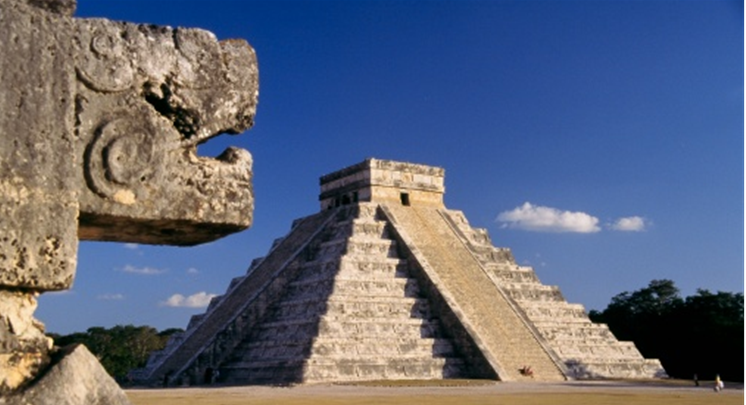
Objectives

-Students will learn about the changes in architecture within post-colonization Mayan architecture.

-Students will learn about new architecture terms used within post-colonization Mayan architecture.

-Students will learn about the history behind Mayan architecture post-colonization. 

Lesson 9 

What does the Mayan culture look like today

Objectives

What does the Mayan culture look like today

1.Then V.S. now

2.Art, crafts, religion, food, and economic changes

Lesson 10 

CONCLUSION 

Objectives


  • Students will summarize key aspects of Mayan culture, traditions, and artistic practices.
  • Students will analyze how Mayan art (especially textiles and symbols) communicates meaning and identity.
  • Students will create a final reflection project that connects Mayan culture to their own experiences and identity.